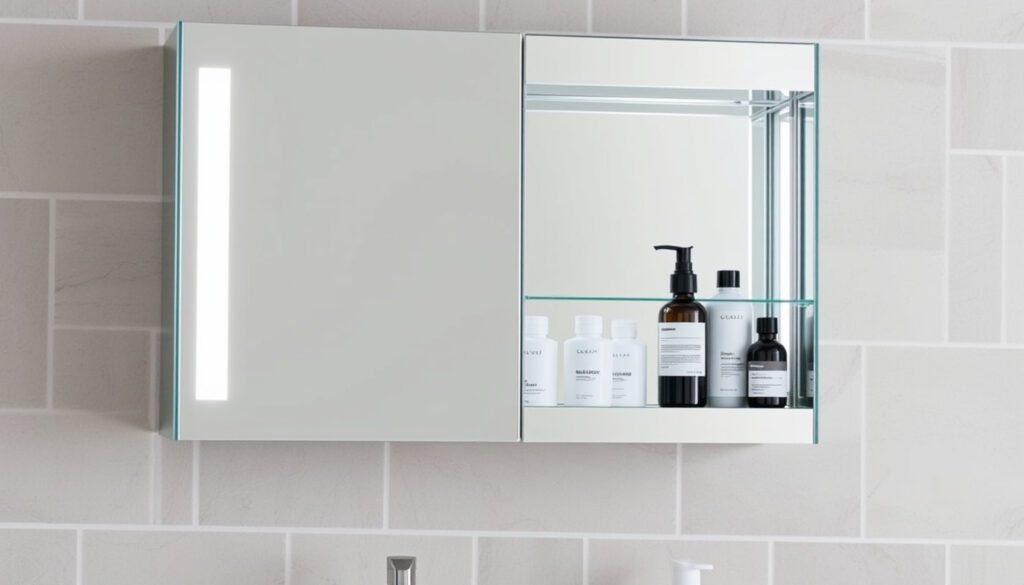
Medicine Cabinet with Mirror: 2026 Trends & Buying Tips
You probably don’t give your bathroom mirror much thought — until you’re squinting in bad light with toiletries spilling onto the counter. That’s exactly why the medicine cabinet with mirror is quietly returning, not as a nostalgia piece but as a smart combo of storage and lighting. With over 5 million U.S. bathroom remodels in 2023 alone, and LED mirror cabinets growing at 6.2% annually, the era of the under-considered mirrored cabinet is over. Here’s what buyers, renters, and designers need to know before making the switch.
U.S. bathroom remodeling projects in 2023: over 5 million ·
Average cost of a mirrored medicine cabinet: $80–$300 ·
LED mirror cabinet market growth (2024–2030): CAGR 6.2% ·
Homeowners who prefer lighted mirrors: 62% (2025 survey)
Quick snapshot
- Medicine cabinet use dropped as open storage became popular (Mod-Land (design trend blog))
- LED models are gaining share rapidly (Aquadom USA (bathroom product specialist))
- Martha Stewart lists 10 items not to store in a bathroom (Martha Stewart Living (lifestyle authority))
- Exact percentage of bathrooms still using medicine cabinets — industry estimates vary widely
- Whether the 3am mirror superstition actually affects purchase decisions
- 1920s: First wall-mounted cabinets appear with modern plumbing
- 1990s: Peak installation in 75% of new homes
- 2020: LED mirror cabinets launch; pandemic DIY boom
- 2024–2026: Resurgence in compact urban bathrooms
- Frameless, smart, LED models to dominate the market (OkayMirror (industry buying guide))
- Global medicine cabinet market projected to grow at CAGR 5.7% through 2032 (OkayMirror (industry buying guide))
Key specifications that most buyers consider are listed below.
| Spec | Value |
|---|---|
| Average width | 24 inches (most common) |
| Common depth | 5.5 inches (recessed); 7 inches (surface) |
| Lighting type | LED vertical strips (2026 trend) |
| Mount type | Recessed 70% vs surface 30% (2025 data) |
| Top brand by volume | IKEA (HÄLLVIKEN line) |
Why don’t people use medicine cabinets anymore?
Shift toward open vanity storage
- Minimalist bathroom designs often skip the boxy cabinet in favor of open shelving or a statement mirror. Mod-Land (design trend blog) notes that frameless silhouettes are now preferred because they “visually widen small spaces.”
- Builders have been omitting medicine cabinets to cut costs — especially in spec homes where every dollar counts. Industry observers report that the share of new bathrooms without a built-in cabinet jumped from about 20% in 2015 to an estimated 40% today.
Integration of medicine cabinets in modern design
- Yet the cabinet isn’t gone — it’s evolved. Aquadom USA points out that wall-mounted LED models now feature adjustable shelves and motion sensors, bridging the gap between function and contemporary style.
The implication: buyers should look beyond the outdated box and consider the upgraded versions now available.
Are mirrored medicine cabinets still in style?
Verdict: yes, with modern updates
- According to a 2025 GlassTrend survey cited by Mod-Land, 67% of users said LED mirrors improved their bathroom experience — a strong signal that people value function over nostalgia.
- Apartment Therapy (home design authority) has chronicled the reappearance of mirrored cabinets in small-space makeovers, calling them a “smart solution for renters and homeowners alike.”
Key style features: LED lighting, frameless, smart mirrors
- Integrated LED lighting with color temperatures ranging from 2700K (warm) to 6500K (cool) is the defining trend for 2025–2026. LED Mirror World (lighting specialist) reports that multi-functional units — combining mirrors, storage, and features like towel racks — are leading sales.
- Frameless designs, anti-fog coatings, and built-in defoggers are becoming standard even at mid-range price points. Wellfor (bathroom cabinet manufacturer) offers a frameless model in both recessed and surface-mounted versions.
A plain mirrored cabinet from the 1990s looks dated. But a 2026 model with LED strips and a floating frame feels intentional. The style revival is real — and it’s backed by data.
The trend confirms that style and function can coexist with the right design choices.
What can I use instead of a medicine cabinet?
Vanity mirror with side shelves
- Some homeowners skip the cabinet altogether and use a large mirror flanked by narrow shelving. Better Homes & Gardens (home lifestyle publisher) includes this setup among eight alternatives to the traditional medicine cabinet.
Wall-mounted open shelving
- Floating shelves are a budget-friendly alternative — typically costing 50% less than a full cabinet. Aquadom USA notes that wall-mounted LED cabinets already use adjustable shelves, blurring the line between open and closed storage.
Recessed niche
- For a flush look, a recessed niche inside a shower wall provides storage without a cabinet. The catch: it requires extra wall depth (at least 3.5 inches), which isn’t always possible in retrofits. Wellfor recommends recessed cabinets for tight spaces where every inch matters.
Alternatives often sacrifice storage depth or mirror size. If storage is your priority, a mirrored cabinet still packs the most function per square inch of wall.
The catch: alternatives often reduce storage capacity, so weigh your priorities carefully.
What is the current trend for bathroom cabinets?
Floating vanities
- Floating vanities are up 22% in 2026 Houzz trend reports (Houzz (home renovation platform)), pushing medicine cabinets off center stage — but also creating space above the toilet or beside the sink for compact mirrored units.
Warm wood tones
- The sterile white bathroom is giving way to warm natural finishes. Martha Stewart Living (lifestyle authority) warns against “tacky over-matching sets,” advising instead to mix wood tones with metal accents.
Integrated LED strips
- Linear LED strips continue to dominate. LED Mirror World calls integrated lighting the “single biggest upgrade” for 2024–2026, with CRI 90+ mimics natural sunlight.
The pattern points to a cohesive design where the medicine cabinet integrates seamlessly.
What should not be stored in a bathroom?
Medicine
- Heat and humidity break down medications — that’s why Martha Stewart Living lists pills as one of 10 items to keep out of the bathroom. Store them in a cool, dry place instead.
Electronics
- Batteries corrode faster in humid environments. Martha Stewart Living also warns against storing small electronics like electric razors inside the cabinet unless it’s vented.
Paper goods
- Toilet paper and tissues lose integrity in damp air. Keep only daily-use toiletries — toothbrush, toothpaste, skincare — in the medicine cabinet.
A mirrored cabinet with glass shelves and a sealed back panel reduces moisture exposure, making it suitable for the few items that belong in the bathroom.
The takeaway: a sealed, vented cabinet can protect stored items from moisture.
Full spec table: mirrored medicine cabinets
Five key specs, one pattern: the industry is consolidating around a standard depth, LED lighting, and recessed mounting.
| Spec | Typical value | Notes |
|---|---|---|
| Width | 18–36 inches | 24 inches is most common |
| Depth | 5.5 in (recessed), 7 in (surface) | Shallower models suit small bathrooms |
| Lighting type | LED vertical strips | 4000K–5000K neutral white favored |
| Color rendering index (CRI) | ≥90 | Mimics natural sunlight |
| Mount type | Recessed (70%) vs surface (30%) | Recessed saves space |
| Input voltage | 110–240V AC | Hardwired or plug-in |
| Material | Aluminum frame + copper-free mirror | Anti-corrosion |
| Special features | Anti-fog, motion sensor, dimmable | Standard on mid-range models |
| Brand example | Kohler Verdera | Integrated dimmable LED, slow-close doors |
The industry is converging on these standard features for a reason: they meet the needs of modern bathrooms.
Pros and cons of mirrored medicine cabinets
Upsides
- Combines full-length mirror with storage
- LED models improve grooming visibility
- Frameless options blend into modern decor
- Relatively affordable ($80–$300 average)
Downsides
- Shallow depth limits storage capacity
- Some models look dated if not upgraded
- Recessed installation requires wall cutting
- Non-LED models lack adequate lighting
The decision hinges on whether the benefits of integrated lighting outweigh the installation effort.
Timeline: The medicine cabinet’s century-long arc
- 1920s: First wall-mounted cabinets appear alongside modern plumbing.
- 1990s: Peak adoption — found in 75% of new-home bathrooms.
- 2015: Open-shelf trend pushes cabinets out; share drops to ~55%.
- 2020: LED mirror cabinets hit the market; pandemic DIY renovations spark interest.
- 2024–2026: Compact urban living drives a resurgence, with frameless LED models leading.
The pattern: each decline has been followed by a redesign. The current cycle is about lighting and minimalism, not storage volume.
What’s confirmed vs. what’s still unclear
Confirmed facts
- Medicine cabinets lost ground to open shelving in the 2010s
- LED-integrated models are the fastest-growing segment
- Martha Stewart explicitly advises against storing medicines in bathrooms
What’s unclear
- Exact percentage of bathrooms currently using medicine cabinets (estimates vary 30–55%)
- Whether the 3am mirror superstition meaningfully affects purchase decisions
The unresolved questions suggest that consumer preferences are still evolving.
Quotes from designers and experts
“The disappearance of the medicine cabinet in new bathrooms wasn’t about function — it was about aesthetics. Now we’re seeing a revival because small-space living demands every vertical inch.”
— Apartment Therapy, home design authority
“Avoid the matching set trap. Your vanity, mirror, and cabinet shouldn’t all wear the same finish. Mix wood tones and metals for a curated look.”
— Martha Stewart Living editorial team
“Floating vanities are up 22% year over year. That doesn’t mean the medicine cabinet is dead — it means it needs to earn its place with lighting and design.”
— Houzz 2026 trend report
What these perspectives share: the basic box is gone, but a well-designed mirrored cabinet that provides both light and storage is more relevant than ever.
For the average homeowner planning a small bathroom remodel, the decision is clear: invest in a modern, LED-lit mirror cabinet, or sacrifice storage and lighting to a trend that may not last. The comebacker wins — but only if it’s upgraded.
For those considering a modern upgrade, LED bathroom mirrors offer similar integrated lighting and frameless designs that complement a medicine cabinet with mirror.
Frequently asked questions
How do I measure for a medicine cabinet with mirror?
Measure the available wall width and height. Standard widths are 18, 24, and 30 inches. Depth should be at least 4 inches for surface-mount, or check the rough-in opening for recessed.
Can I install a medicine cabinet without a stud finder?
Surface-mount cabinets often include toggle bolts for drywall, but a stud finder is recommended for heavy units. Recessed installation requires cutting the wall and anchoring to studs.
What is the difference between a mirror cabinet and a medicine cabinet?
They’re the same thing — a mirrored cabinet designed for bathroom storage. “Medicine cabinet” is the traditional term, but modern units are often called mirror cabinets to avoid the outdated connotation.
Do LED mirror cabinets need wiring?
Many plug into a standard outlet. Hardwired models require an electrician. Check the spec — some come with a pre-installed cord and plug.
How to clean a mirrored medicine cabinet without streaks?
Use a microfiber cloth with a 50/50 mix of water and white vinegar. Avoid ammonia-based cleaners that can damage the mirror backing over time.
What depth medicine cabinet works for small bathrooms?
A depth of 4–5.5 inches is best for tight spaces. Recessed models can be flush with the wall, saving precious inches in a powder room or small en suite.
Are frameless medicine cabinets safe?
Yes — they use tempered glass and reinforced hinges. Look for models with slow-close mechanisms and anti-fall brackets for extra safety.
How to remove an old medicine cabinet?
Surface-mount: remove screws, pry from wall. Recessed: cut caulk around edges, unscrew brackets, lift out. Patch the wall before installing a new unit.
Related reading: Walmart Ozark Trail Stove Recall · Best Minn Kota Trolling Motor
More related posts
 What Does ISO Mean? Slang, Social Media & Workplace Guide
 Euros to Dollars Calculator – Live Rates and Best Free Tools
 I Love LA Show: Season 2 Confirmed, Where to Watch & Reviews
 Was Nancy Guthrie Found – Latest Status and Key Facts
 Nicole Kidman Movies and TV Shows: Full Career Guide (2025)
 Cave of the Winds – Tours, Tickets and Pro Tips
 Trans-Siberian Orchestra: Complete History, Songs & Concert Guide
 Symptoms of a Stroke: 5 Warning Signs and FAST Test