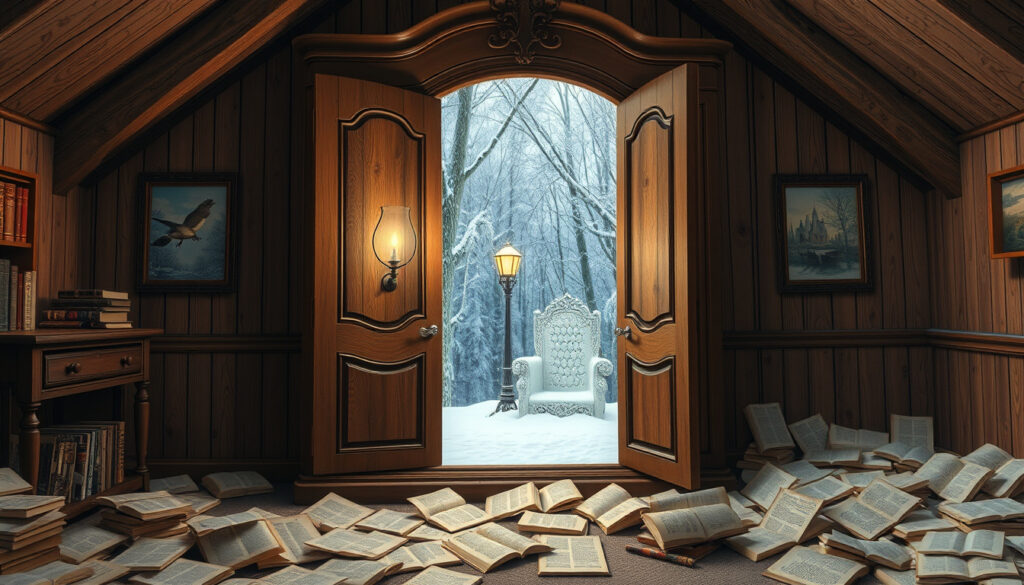
The Lion, the Witch and the Wardrobe: Bans, Controversy & Summary
Ask any librarian about the most unexpected books to land on banned shelves, and you’ll get an earful. What’s often left out of that conversation is that some of those titles are beloved childhood classics. The Lion, the Witch and the Wardrobe has appeared on challenge lists more than once since 1950, for reasons that say just as much about changing cultural moods as they do about the book itself.
Author: C. S. Lewis · Publication Year: 1950 · Series: The Chronicles of Narnia · Book 1 Publisher: Geoffrey Bles · Major Adaptation: 2005 Film
Quick snapshot
- Published October 16, 1950 (ScreenRant)
- Banned twice since the 1950s: 1990 Maryland, 2005 Florida (ScreenRant)
- First book in the seven-volume Chronicles of Narnia series (ScreenRant)
- Exact number of challenge incidents across all US school districts
- Whether any country outside the US has formally banned the book
- Full scope of 2005 Florida resolution outcome
- 1990: Howard County, Maryland school ban for violence and mysticism (ScreenRant)
- 2002: Philip Pullman’s Guardian critique of racism and sexism (NarniaWeb)
- 2005: Florida controversy after Jeb Bush selected it as required reading (ScreenRant)
- Ongoing debates about religious allegory in public school curricula
- Continued relevance to Banned Books Week programming
- Rising interest as new generations encounter the series
The table below consolidates core facts about the first Narnia book, drawing from library and literary sources.
| Label | Value |
|---|---|
| Author | C. S. Lewis |
| Genre | Portal fantasy |
| Publisher | Geoffrey Bles |
| Main Antagonist | White Witch |
| Hero Figure | Aslan the Lion |
| Series Length | 7 books (1950–1956) |
| Lead Characters | Peter, Susan, Edmund, Lucy |
What was The Lion, the Witch and the Wardrobe banned for?
The book’s bans have come in waves, driven by different concerns that sometimes contradict each other. In 1990, Howard County, Maryland schools removed it from shelves citing “graphic violence, mysticism, and gore” (ScreenRant). Notably, critics in that case argued the mysticism was “thinly veiled Christianity” with Aslan functioning as Jesus—yet other challenges have targeted exactly those Christian themes as inappropriate for public schools.
In 2005, Florida Governor Jeb Bush selected the book for statewide required reading, prompting Americans United for the Separation of Church and State to object. The group argued that Aslan’s Christ-like characterization made the book unconstitutional in public school settings (ScreenRant). The same book, then, triggered two opposite objections: too Christian for some school districts, not Christian enough for others.
Banned Book Review details
UConn Library’s guide to challenged books lists The Lion, the Witch and the Wardrobe among titles frequently challenged for “promoting the occult, mysticism, Wicca religion, being anti-Christian, and violence” (UConn Library Guide). The breadth of those reasons—from occult to anti-Christian—illustrates how the book’s layered symbolism invites conflicting interpretations.
The American Library Association’s records show the book has appeared on multiple regional challenge lists, though it has not ranked among the top 10 most frequently banned titles nationally (PEN America provides ongoing tracking at PEN America).
Common challenge reasons
Research into challenge patterns reveals recurring categories: violence (particularly Aslan’s death and battle scenes), religious content (both pro-Christian and anti-religious interpretations), and moral concerns about the magic system’s effects on young readers (The Hopeful Heroine blog review). What’s striking is that the book remains relatively mild by modern standards—Common Sense Media rates the 2005 film adaptation appropriate for children despite its battle sequences.
What is The Lion, the Witch and the Wardrobe actually about?
Four siblings—Peter, Susan, Edmund, and Lucy—discover a wardrobe that serves as a portal to Narnia, a magical land where animals speak and ancient prophecies shape destiny. Lucy enters first, followed by Edmund, whose encounter with the White Witch leads the whole group into her captivity (The Hopeful Heroine blog review). The story hinges on Edmund’s betrayal and redemption, with Aslan the lion serving as both protector and sacrificial figure.
Plot overview
C.S. Lewis constructed the narrative around Christian ideas he wanted to help children understand (UConn Library Guide). Aslan’s willing sacrifice to save Edmund, followed by his resurrection, maps directly onto the Easter story. The White Witch represents tyranny; the children’s journey represents growth from innocence to moral agency. The series spans themes of growth, faith, childhood, family, and religion across its seven volumes (ScreenRant).
Key characters
Aslan functions as Narnia’s creator and savior figure. The White Witch enforces a permanent winter through magical compulsion. Among the Pevensie children, Edmund’s arc—from jealous younger brother to king—provides the moral center. Supporting characters like Mr. Tumnus the faun and Mr. and Mrs. Beaver embody loyalty and guidance.
Why is The Lion, the Witch and the Wardrobe controversial?
The controversies surrounding Narnia split roughly into two camps: religious objections and social-justice criticisms. On June 3, 2002, author Philip Pullman—the creator of His Dark Materials, itself frequently challenged—published a scathing attack in The Guardian. He called Narnia “monumentally disparaging of girls and women” and “blatantly racist,” noting that “one girl was sent to hell because she was getting interested in clothes and boys” (NarniaWeb compilation of Pullman critique). His critique extended to the colonial undertones of children “ruling” an indigenous land.
The book sits in an unusual position: celebrated as Christian allegory while simultaneously accused of reinforcing harmful stereotypes that contradict its own moral framework. Whether you read it as theology, fantasy adventure, or cultural artifact often depends on what you’re looking for.
Theological debates
C.S. Lewis did not initially intend religion in Narnia but later recognized Christian aspects in his work (ScreenRant). This ambiguity has fueled decades of debate: is Aslan a powerful theological symbol, a clever teaching tool, or a subtle indoctrination mechanism? The 2005 Florida controversy specifically deemed the book offensive to non-Christians as a “blatantly Christian story” (The Hopeful Heroine blog review).
Symbolism critiques
The Independent published an influential piece calling Narnia “the sheerest poison” for racism, misogyny, and “lack of imagination” (The Independent arts criticism). The Discovery Institute, an organization known for its interest in Intelligent Design, echoed this critique (Discovery Institute commentary). Critics argue that the book’s moral clarity can calcify into intolerance: Narnia’s binaries of good versus evil leave little room for moral complexity.
What are the 7 Chronicles of Narnia in order?
The Chronicles of Narnia consists of seven books published between 1950 and 1956 (ScreenRant). However, publication order and chronological order differ—a source of ongoing confusion for new readers.
The table below shows how publication and chronological orders diverge across the series, illustrating the unique structure Lewis created.
| Publication Order | Chronological Order | Title |
|---|---|---|
| 1 | 6 | The Lion, the Witch and the Wardrobe |
| 2 | 3 | Prince Caspian |
| 3 | 4 | The Voyage of the Dawn Treader |
| 4 | 5 | The Silver Chair |
| 5 | 7 | The Horse and His Boy |
| 6 | 2 | The Magician’s Nephew |
| 7 | 1 | The Last Battle |
Seven books, one pattern: reading by publication date gives you the original experience of a generation of readers discovering Narnia book by book, while chronological order reveals Lewis’s backstory-first approach to the universe.
Publication order
The Lion, the Witch and the Wardrobe was the first published, appearing in 1950 from Geoffrey Bles (ScreenRant). The final book, The Last Battle, appeared in 1956. Each book stands alone while building the larger mythology.
Chronological order
The Magician’s Nephew (published sixth) actually takes place first chronologically, explaining how the wardrobe became a portal. The Last Battle concludes the timeline. This dual ordering is unique among major fantasy series and reflects Lewis writing the backstory later.
What is the hidden message of Narnia?
The “hidden message” of Narnia depends on who’s interpreting it and what they bring to the text. For many, the message is explicit: Aslan represents Christ, and his sacrifice embodies salvation theology (ScreenRant). For others, the message is a troubling one—racist stereotypes, gendered roles, and colonial power dynamics embedded in a story that presents itself as morally unambiguous.
Allegory explanations
Lewis was explicit that the Narnia books were written to convey Christian ideas to children in accessible form (UConn Library Guide). Aslan dies to save Edmund and returns to defeat the Witch—unmistakably parallel to the Crucifixion and Resurrection. Lewis acknowledged this openly in later writings, though he noted he didn’t consciously plan it during the writing.
Author’s theology
Lewis’s own theology was deeply conservative and evangelical, though he never joined any specific church. His friend J.R.R. Tolkien criticized the allegory approach, preferring myth to theology. The tension between Narnia’s explicit Christian message and its mythic, fairy-tale form is arguably its most interesting feature—and the source of its ongoing controversies.
Confirmed
- Published October 16, 1950
- Banned in 1990 Maryland schools
- Banned in 2005 Florida schools
- Philip Pullman’s 2002 Guardian critique
- First published Narnia book
- Series of 7 books, 1950–1956
- Aslan as Christ-like figure
Unconfirmed or disputed
- Exact number of US challenge incidents
- Whether Aslan’s sacrifice constitutes “indoctrination”
- Severity of series’ racist and sexist content
- Whether the book is “unconstitutional” in school settings
“It is monumentally disparaging of girls and women. It is blatantly racist. One girl was sent to hell because she was getting interested in clothes and boys.”
— Philip Pullman, author, in NarniaWeb
“It looks like a fairy story about some nicely behaved children, a wicked witch or two and some talking animals, but it is the sheerest poison.”
— The Independent, arts criticism
Book challenges continue today, with PEN America tracking over 1,600 titles banned in US schools during the 2021–2023 period. The Lion, the Witch and the Wardrobe’s presence on challenge lists across multiple decades makes it a case study in how cultural anxieties shift while the same stories remain lightning rods.
The debate over Narnia reflects broader tensions in children’s literature: how much moral weight should stories carry? Should fantasy’s symbolic layers be held to theological or ethical consistency? And who decides what’s appropriate for young readers? These questions have no clean answers, which is precisely why the book keeps appearing in these conversations.
For parents and educators, the practical implication is straightforward: reading the book alongside children and discussing its themes is more productive than either banning or uncritically celebrating it. The Chronicles of Narnia has endured since 1950 because it means different things to different readers—and that’s worth talking about.
Related reading: Jane Austen Wrecked My Life plot summary · A Little Life Summary
The Lion, the Witch and the Wardrobe’s bans for religious themes echo wider Chronicles of Narnia controversiesChronicles of Narnia controversies, including debates over the ideal reading sequence.
Frequently asked questions
What is the Deplorable Word in Narnia?
The Deplorable Word is mentioned in The Magician’s Nephew, the sixth book chronologically. It’s a spell of immense destructive power that Jadis, the future White Witch, uses to annihilate an entire kingdom. The word itself is never written in the text—Lewis leaves it to the reader’s imagination, which is arguably more frightening.
Why can’t adults enter Narnia?
Adults generally cannot enter Narnia through the wardrobe in the first book because the magic of Narnia recognizes the Pevensie children as the rightful rulers. In the mythology, the wardrobe is a one-way door from our world into Narnia, and Aslan’s (summoning) is required for adults to gain entry. Later books play with this rule—Digory Kirke, the original discoverer, returns as an old man in The Magician’s Nephew.
What is the #1 most banned book of all time?
According to ALA records, Alice’s Adventures in Wonderland has faced significant challenges historically, though contemporary top-banned lists frequently feature titles like Gender Queer, Maus, and ALA’s Top 100 Banned Books selections. The Lion, the Witch and the Wardrobe does not rank among the most frequently banned books overall, despite its specific regional challenges.
Why don’t some Christians like The Chronicles of Narnia?
Some evangelical Christians object to Narnia precisely because its allegory is indirect rather than explicit. They argue that embedding Christian theology in fantasy makes the message confusing or that it prioritizes storytelling over clear doctrine. Others worry about children interpreting magical elements as spiritually dangerous.
Where to watch The Lion, the Witch and the Wardrobe?
The most prominent adaptation is Disney’s 2005 film starring Georgie Henley, Skandar Keynes, William Moseley, and Anna Popplewell as the Pevensie children, with Tilda Swinton as the White Witch and Jim Broadbent as Professor Kirke. The BBC produced a well-regarded television adaptation in 1988 with authentic period production values. Both are widely available through streaming platforms.
Who is in the cast of the 2005 movie?
The 2005 Disney adaptation featured Tilda Swinton (White Witch), Ioan Gruffudd (Mr. Tumnus, though his role was cut from the theatrical release), Andrew Adamson directing, and voice work by Liam Neeson as Aslan. The Pevensie children were portrayed by Georgie Henley (Lucy), Skandar Keynes (Edmund), William Moseley (Peter), and Anna Popplewell (Susan).
More related posts
 Cherry Eye in Dogs: Causes, Treatment, and Cost Guide
 Current Home Interest Rates Ireland: Latest Mortgage Rates 2024
 What Time Is It in Florida Right Now? Current Time Zones
 What Causes Acid Reflux: Triggers, Foods & Prevention Tips
 Does Coca-Cola Own Dr Pepper? Ownership Myths and Facts
 Neil Patrick Harris Amy Winehouse – Cake Controversy Explained
 Leave the World Behind Reviews: Why Critics & Audiences Split
 Sub Sandwiches Near Me: Best Ireland Spots & Delivery