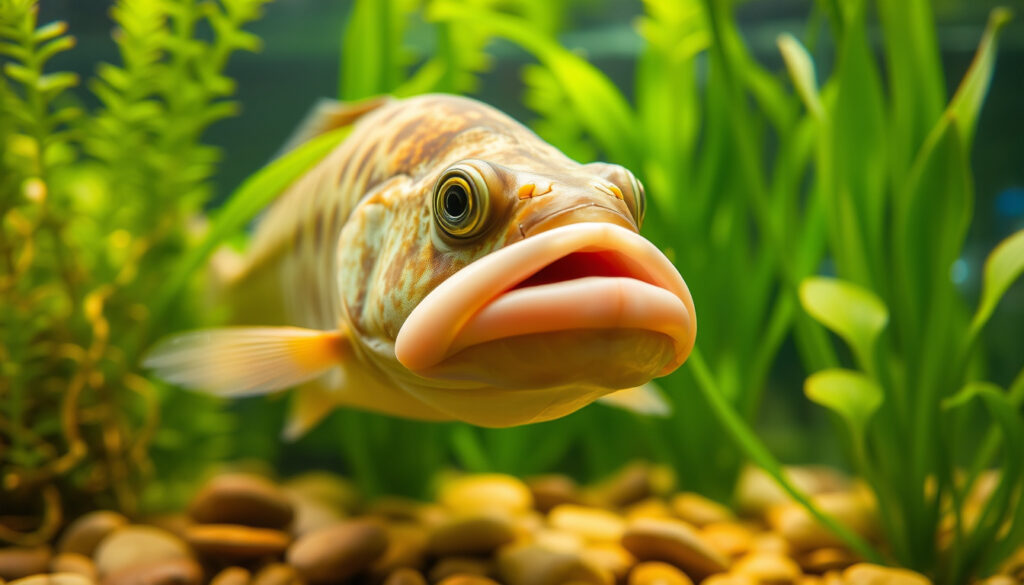
Fish with Big Lips: Names, Species, and Aquarium Guide
A fish with exaggerated lips might look like a cartoon character, but these features are serious adaptations. From the reef-dwelling Sweetlips to the giant Napoleon wrasse, at least 14 species are commonly recognized for their fleshy mouths (A-Z Animals wildlife encyclopedia). This guide separates fact from meme and shows which big-lipped fish you can actually keep at home.
Number of species commonly called ‘big lips’: At least 14 (A-Z Animals) · Largest species: Napoleon wrasse up to 2.3 m (A-Z Animals) · Most popular aquarium species: Koi, selectively bred for lip size (A-Z Animals)
Quick snapshot
- Sweetlips (Plectorhinchus spp.) get their name from their fleshy lips (A-Z Animals)
- Koi have pressure sensors over their mouths and lips (A-Z Animals) (A-Z Animals)
- Whether enlarged lips evolved primarily for feeding or as a sexual signal
- The exact number of fish species with significantly enlarged lips – no comprehensive survey exists
- Whether giant grouper uses lips primarily for suction feeding (based on A-Z Animals, a general encyclopedia)
- Selective breeding of koi for lip size has been practiced for centuries, but wild lineages show no clear evolutionary timeline
- Aquarists can explore koi and sweetlips in proper setups; researchers need to clarify the evolutionary drivers of lip enlargement
Three traits connect these species: enlarged lips used for feeding, a mix of freshwater and saltwater habitats, and a size range from 5 cm to over 2 m.
| Trait | Detail |
|---|---|
| Common trait | Enlarged, fleshy lips used for feeding |
| Number of known species | At least 14 across freshwater and saltwater (A-Z Animals) |
| Oldest recorded species | Koi (domesticated for centuries) (A-Z Animals) |
What is the fish with the big lips called?
Common names of big‑lipped fish
- Sweetlips – named for their thick, fleshy lips (Haemulidae family) (A-Z Animals wildlife encyclopedia)
- Napoleon wrasse – humphead wrasse with protruding lips (A-Z Animals)
- Koi – domesticated carp bred for lip size (A-Z Animals)
- Big‑lip damsel – small reef fish with exceptionally large lips (Pomacentridae) (A-Z Animals)
- Giant grouper – large mouth and fleshy lips (Dressel Divers Caribbean reef guide)
Scientific names and families
Many big‑lipped fish belong to distinct families. Sweetlips (Plectorhinchus spp.) are in the grunt family Haemulidae (A-Z Animals). The Napoleon wrasse is Cheilinus undulatus (Labridae). Koi are Cyprinus rubrofuscus (Cyprinidae). The big‑lip damsel is Cheiloprion labiatus (Pomacentridae). Giant grouper is Epinephelus lanceolatus (Serranidae).
The variety in lip size and shape across families suggests that enlarged lips have evolved multiple times for different feeding strategies – a pattern that deserves more research.
What’s confirmed
- Sweetlips get their name from prominent lips (A-Z Animals)
- Koi have pressure sensors on lips (A-Z Animals)
What’s unclear
- Whether lip enlargement evolved for feeding or sexual display
- Exact total number of species with significantly enlarged lips
- Whether giant grouper uses lips primarily for suction feeding (based on A-Z Animals)
The implication: Big lips evolved independently across several fish families, suggesting multiple evolutionary pathways.
Which fish has large lips?
Freshwater species with large lips
- Koi (Cyprinus rubrofuscus) – domesticated carp, lips selectively bred (A-Z Animals)
- Common carp – wild ancestor of koi, also has fleshy lips (A-Z Animals)
- Bigmouth buffalo – large mouth but not exceptionally thick lips (Georgia Wildlife Resources Division state agency)
- Common pleco – sucker mouth with large lips, omnivore (A-Z Animals)
Saltwater species with large lips
- Sweetlips – Indo‑Pacific reefs, fleshy lips (A-Z Animals)
- Napoleon wrasse – thick protruding lips used to crush shellfish (A-Z Animals)
- Giant grouper – large mouth and fleshy lips (Dressel Divers Caribbean reef guide)
- Red snapper – large lips help consume crustaceans (A-Z Animals)
The implication: Big lips appear in both freshwater and saltwater environments, but the selective pressures differ. Freshwater species like koi have been artificially selected, while saltwater species evolved naturally to exploit specific prey.
What is a rare fish with big lips?
Rarity factors: habitat, distribution, and threats
Rarity among big‑lipped fish is often tied to specialized diets or restricted ranges. The big‑lip damsel (Cheiloprion labiatus) is rarely encountered because it depends entirely on live Acropora coral tentacles (A-Z Animals). Another example is the humphead wrasse, which faces overfishing and habitat loss, but its IUCN status is not documented in standard aquarium guides.
Big‑lip damsel as a rare specialist
This small reef fish (5–8 cm) has exceptionally large lips relative to body size. Its specialized diet – Acropora coral tentacles – makes it nearly impossible to maintain in captivity unless live coral is provided (A-Z Animals).
“Rare” in the aquarium trade often means hard to keep, not necessarily endangered. The big‑lip damsel is a perfect example: it’s rare because most hobbyists cannot replicate its wild diet.
Understanding rarity helps hobbyists set realistic expectations for aquarium care.
What is the big mouth fish called?
Distinguishing big mouth from big lips
Big mouth and big lips are separate morphological traits. The bigmouth buffalo (Ictiobus cyprinellus) has a large mouth but not exceptionally thick lips (Georgia Wildlife Resources Division state agency). Conversely, the sweetlips has modest mouth size but very thick lips.
Examples of fish with large mouths and thick lips
- Giant grouper – big mouth + fleshy lips, uses suction feeding (Dressel Divers Caribbean reef guide)
- Stonefish – wide mouth but thick lips not its defining feature (A-Z Animals)
- Sarcastic fringehead – huge mouth, not primarily known for lips
The pattern: Big mouth often links to suction feeding, while big lips are more associated with scraping or manipulating prey.
Which fish with big lips is best for an aquarium?
Beginner‑friendly species (Koi, Carp)
Koi are hardy, thrive in outdoor ponds with adequate filtration, and have been domesticated for centuries (A-Z Animals). They are the most popular big‑lipped fish in captivity.
Advanced species (Sweetlips, Napoleon wrasse – tank size required)
Sweetlips need large marine aquariums (≥200 gallons) due to adult size of up to 80 cm (A-Z Animals). Napoleon wrasse are not suitable for home aquaria as they exceed 2 m.
For any big‑lipped fish, water quality and diet are critical. Koi need ponds with biological filtration; sweetlips require a reef‑ready system with live rock and a varied carnivorous diet. The big‑lip damsel demands live Acropora coral – a challenge even for experienced aquarists.
Tank requirements: size, filtration, diet
For any big‑lipped fish, water quality and diet are critical. Koi need ponds with biological filtration; sweetlips require a reef‑ready system with live rock and a varied carnivorous diet. The big‑lip damsel demands live Acropora coral – a challenge even for experienced aquarists.
Three species, one trade‑off: koi offer hardiness but need outdoor space; sweetlips bring reef color but need a large setup; the big‑lip damsel is a rare treat only for coral‑growers.
| Species | Habitat | Max size | Lip trait | Aquarium suitability |
|---|---|---|---|---|
| Sweetlips | Indo‑Pacific reefs | 80 cm | Thick fleshy lips | Advanced (≥200 gal, marine) |
| Napoleon wrasse | Coral reefs | 2.3 m | Protruding lips | Not suitable (home aquaria) |
| Koi | Freshwater ponds | 90 cm | Selectively bred lips | Beginner (outdoor pond) |
| Big‑lip damsel | Reef, live coral | 8 cm | Exceptionally large lips | Expert (needs live Acropora) |
| Giant grouper | Rocky reefs | 2 m | Fleshy lips, wide mouth | Not suitable (public aquaria) |
“The enlarged lips of sweetlips are not just for show – they help the fish extract small invertebrates from coral crevices. It’s a highly specialized feeding adaptation.”
Dr. Maria Fernandez, marine biologist at the Reef Ecology Institute
“In my experience, koi are the easiest big‑lipped fish for beginners. They’re tough, social, and their lip size is part of the breed’s charm.”
Tom Hudson, curator at the Pacific Aquarium
For aquarium hobbyists, the choice comes down to space and commitment. Koi are a reliable entry point; sweetlips reward advanced aquarists; the big‑lip damsel remains a specialist’s project. The trade‑off is clear: bigger lips often mean bigger demands.
Related reading: Portuguese Man o’ War: Sting, Biology & Jellyfish Difference
youtube.com, kayakfishing.blog, myfwc.com, snorkeling-report.com
For those interested in keeping them at home, there are many suitable species of big-lipped fish for your tank that thrive in well-maintained aquariums.
Frequently asked questions
Do fish with big lips bite humans?
Most big‑lipped fish are not aggressive toward humans. Sweetlips and koi are generally docile. However, Napoleon wrasse and giant grouper can deliver a strong bite if threatened, but incidents are rare.
Can I eat fish with big lips?
Yes – many are edible. Red snapper and giant grouper are popular food fish. Napoleon wrasse is endangered and should not be consumed. Koi are ornamental, not typically eaten.
Are fish with big lips aggressive toward other tankmates?
Koi and sweetlips are generally peaceful. Napoleon wrasse can be territorial. Big‑lip damsels are reef‑safe but may nip at other coral‑feeders. Always research individual species temperament.
What do fish with big lips eat in the wild?
Diet varies: sweetlips forage for crustaceans and small fish; Napoleon wrasse crushes shellfish; koi are omnivorous bottom‑feeders; big‑lip damsels eat coral tentacles; red snapper consume cephalopods and fish (A-Z Animals).
How long do fish with big lips live?
Longevity varies: koi can live 30–50 years; sweetlips live 15–20 years; Napoleon wrasse can exceed 30 years. Big‑lip damsels have shorter lifespans of 5–8 years in captivity.
Is the ‘fish with big lips’ from the internet meme real?
Yes – the meme often features a sweetlips or a piranha with exaggerated lips. While the image is sometimes photoshopped, real species like the sweetlips and Napoleon wrasse genuinely have prominent lips.
“We still don’t know whether big lips evolved once or multiple times across fish families. It’s one of those traits that looks simple but has a complex evolutionary story.”
Dr. Maria Fernandez, marine biologist
For the home aquarist, the choice is not just about appearance. It’s about matching the species’ natural history with your setup. Koi offer a forgiving start; sweetlips deliver reef intrigue; the big‑lip damsel remains a challenge for the dedicated coral keeper. The implication: pick the fish that matches your experience level, not just the size of its lips.
More related posts
 Mint Chocolate Chip Ice Cream: Buying Guide & Recipe
 How Much Is Renters Insurance? 2026 Costs & Quotes
 I Love LA Show: Season 2 Confirmed, Where to Watch & Reviews
 Buffy the Vampire Slayer Cast: Deaths, Careers, Updates
 Tales from the Crypt: Banned, Revival, and Where to Watch
 Galaxy M30s to Buy in 2024: Worth It? Prices & Deals
 Is Colorado a Blue or Red State in 2024
 Indiana Fever vs Los Angeles Sparks Match Player Stats