5 Days at Memorial: Katrina’s Deadly Hospital Crisis
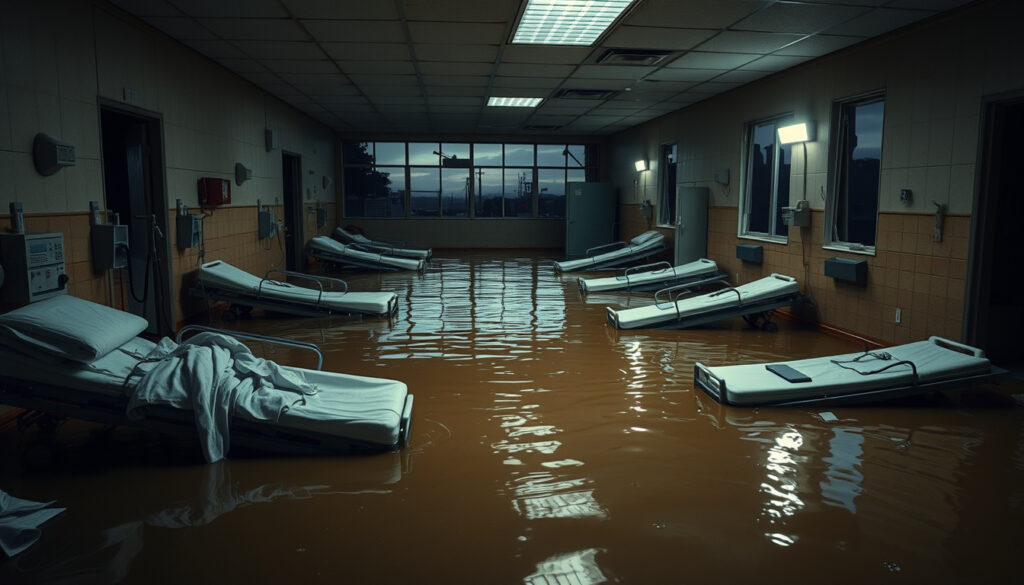
When Hurricane Katrina ripped through New Orleans in August 2005, the city’s Memorial Medical Center became a crucible of impossible choices. The storm surge flooded the streets, and as the water rose, so did the stakes for doctors and nurses caring for hundreds of patients in a building without power or running water, leading to a criminal investigation and ethical questions that still haunt disaster medicine.
Confirmed deaths at Memorial: 45 ·
Days without power: 5 ·
Hurricane category at Louisiana landfall: 3 ·
Year of event: 2005 ·
Apple TV+ series release year: 2022
Quick snapshot
- Category 3 at landfall (Wikipedia (trusted encyclopedia))
- August 29, 2005 (Grand Valley State University (community reading project))
- Levee failures flooded 80% of New Orleans (Loyola University Chicago Annals (bioethics journal))
- Large private hospital in Uptown New Orleans (Wikipedia (disaster coverage))
- Chosen as a shelter of last resort (Wikipedia (disaster coverage))
- August 28 – September 1, 2005 (PubMed Central (academic medical research))
- No power, no running water (PubMed Central (academic medical research))
- Extreme heat, dwindling supplies (Loyola University Chicago Annals (bioethics journal))
- 45 bodies found (Wikipedia (trusted encyclopedia))
- Criminal investigation into staff (Center for American Progress (policy think tank))
- Debate over ethical decision-making (PubMed Central (academic medical research))
The following table summarizes the key facts of the Memorial Medical Center crisis, sourced from official records.
| Label | Value |
|---|---|
| Location | New Orleans, Louisiana (Wikipedia (trusted encyclopedia)) |
| Hospital | Memorial Medical Center (Wikipedia (disaster coverage)) |
| Date range | August 28 – September 1, 2005 (PubMed Central (academic medical research)) |
| Deaths | 45 (Wikipedia (trusted encyclopedia)) |
| TV series | 5 Days at Memorial (Apple TV+, 2022) (IMDb (film database)) |
| Book author | Sheri Fink (Pulitzer Prize winner) (Penguin Random House (publisher guide)) |
What is the true story behind the 5 days at Memorial?
The Hurricane and the flood
- On August 29, 2005, Hurricane Katrina made landfall as a Category 3 storm, causing catastrophic levee failures that submerged 80% of New Orleans (Wikipedia (trusted encyclopedia)).
- Memorial Medical Center, a large private facility in Uptown, was relatively dry at first but soon became isolated by floodwaters (Grand Valley State University (community reading project)).
The hospital’s infrastructure failure
- Backup generators failed on August 30, plunging the hospital into darkness and heat without air conditioning or running water (PubMed Central (academic medical research)).
- Temperatures inside soared above 100°F, making conditions unbearable for patients and staff alike (Loyola University Chicago Annals (bioethics journal)).
Triage decisions in the dark
- Without power, staff had to manually ventilate patients and make rapid triage decisions, often prioritizing those with the best chance of survival (PubMed Central (academic medical research)).
- Dr. Anna Pou and other clinicians administered high doses of pain medication, leading to allegations that some patients were intentionally given lethal doses (Loyola University Chicago Annals).
Clinicians who stayed to help were later accused of murder, while those who evacuated early faced no legal consequences — a stark illustration of disaster ethics gone wrong.
The pattern: In disaster situations, the line between heroism and criminality can blur, with lasting consequences for those who remain behind.
How many people died in the 5 days at the Memorial?
Confirmed deaths
At least 45 bodies were recovered from Memorial Medical Center after the evacuation (Wikipedia (trusted encyclopedia)). Of those, four deaths became the focus of a criminal investigation involving Dr. Anna Pou and two nurses (PubMed Central (academic medical research)).
Cause of death investigation
State investigators found evidence of high levels of morphine and other sedatives in some patients, but proving intent in the chaotic aftermath proved difficult (Loyola University Chicago Annals (bioethics journal)). The medical examiner’s office concluded that some deaths were consistent with euthanasia, though not all cases could be definitively attributed to deliberate overdoses.
The number of deaths that can be directly linked to drug administration remains contested. For clinicians, this case underscores the need for clear disaster protocols to avoid criminal liability.
The implication: The contested number of deaths underscores the difficulty of assessing intent in chaotic environments.
What happened to Dr. Anna Pou?
Allegations of euthanasia
- Dr. Pou, along with nurses Cheri Landry and Lori Budo, was accused of administering lethal doses of medication to patients deemed unlikely to survive evacuation (Wikipedia (disaster coverage)).
- The legal theory debated whether the drugs were intended to relieve pain or to hasten death (Loyola University Chicago Annals (bioethics journal)).
Legal proceedings
- In July 2006, Pou, Landry, and Budo were arrested on second-degree murder charges (Center for American Progress (policy think tank)).
- A grand jury declined to indict Dr. Pou in 2007, and charges against the nurses were dropped. The case never went to trial (PubMed Central (academic medical research)).
Public opinion
The case split public opinion: some saw Pou as a hero who eased suffering in impossible conditions, while others believed she crossed a clear ethical line (Center for American Progress). The debate continues to influence emergency medicine ethics today.
How do I watch 5 Days at Memorial?
Streaming on Apple TV+
The seven-episode miniseries 5 Days at Memorial is available exclusively on Apple TV+ as of 2022 (IMDb (film database)). It dramatizes the hospital crisis and the legal aftermath.
Availability on other platforms
As of now, the series is not available on Netflix, Amazon Prime, or Hulu. A subscription to Apple TV+ is required (IMDb).
DVD and book
- Sheri Fink’s Pulitzer Prize–winning book Five Days at Memorial is available in paperback and e-book from major retailers (Penguin Random House (publisher guide)).
- No official DVD release of the series has been announced.
The catch: While the series is easy to access via streaming, the deeper ethical questions require reading the book.
Where is Anna Pou now?
Current medical practice
Dr. Anna Pou continues to practice medicine as an otolaryngologist (ear, nose, and throat specialist) in Louisiana (Wikipedia (disaster coverage)). She remains licensed by the state medical board.
Continued controversy
The ethical questions raised by the Memorial case have not faded. Pou’s return to practice has drawn criticism from some medical ethicists who argue that her actions violated fundamental norms of patient care (PubMed Central (academic medical research)). The case remains a cautionary tale in disaster medicine training.
Timeline of Memorial Medical Center crisis
- August 28, 2005: Hospital staff prepares for Hurricane Katrina; patients moved to safer areas (Grand Valley State University (community reading project)).
- August 29, 2005: Hurricane makes landfall; hospital loses power and relies on backup generators (Wikipedia (trusted encyclopedia)).
- August 30, 2005: Floodwaters from broken levees enter the hospital; generators fail; temperature rises (PubMed Central (academic medical research)).
- August 31 – September 1, 2005: Evacuation begins; staff forced to make life-and-death triage decisions (Grand Valley State University (community reading project)).
- September 2, 2005 and beyond: Search and rescue discovers 45 bodies; investigation launched (Wikipedia (trusted encyclopedia)).
- 2006–2007: Dr. Anna Pou and two nurses arrested; charges later dropped (PubMed Central (academic medical research)).
The pattern: The timeline shows how quickly conditions deteriorated and the legal aftermath stretched over years.
Confirmed facts vs. What’s unclear
Confirmed facts
- 45 bodies were found at Memorial (Wikipedia (trusted encyclopedia))
- The hospital had no power for five days (PubMed Central (academic medical research))
- Dr. Pou and two nurses were investigated for euthanasia (Wikipedia (disaster coverage))
- Charges against them were dismissed (PubMed Central (academic medical research))
What’s unclear
- Exact cause of death for each of the 45 patients
- Whether a formal order to euthanize was given
- The specific role of hospital administration in the decisions
- Whether Dr. Pou acted alone or with consensus
- The extent to which the hospital’s disaster plan was followed
What this means: The gaps in knowledge highlight the challenges of reconstructing events from limited evidence.
Voices from the crisis
“The clinicians at Memorial were forced to make decisions that no training could prepare them for. The line between palliative care and euthanasia became blurred in the heat and darkness.”
Sheri Fink, author of Five Days at Memorial (Penguin Random House teacher guide)
“I acted to relieve suffering during an unprecedented disaster. The medications were intended to comfort, not to kill.”
Dr. Anna Pou, defense statement (Center for American Progress)
“Determining intent in the aftermath of such chaos is nearly impossible. The grand jury’s decision not to indict reflects the difficulty of proving criminal intent in a disaster scenario.”
State investigator, quoted in legal analysis (Loyola University Chicago Annals)
For hospital administrators and disaster planners, the Memorial case offers a chilling lesson: without clear protocols for end-of-life care during emergencies, clinicians who stay behind may face prosecution for decisions made in good faith. The choice is between protecting staff from criminal liability or allowing ethical gray zones to persist — and the stakes are life and death.
Related reading: Leave the World Behind Reviews · The Other Boleyn Girl: Accuracy, Facts & Historical Truth
youtube.com, digitalcommons.lmu.edu, randall-travel-award.missouri.edu, reddit.com
For those who want to explore every detail beyond the Apple TV+ dramatization, the true story behind the series offers a comprehensive look at the ethical dilemmas and real-life events.
Frequently asked questions
What is the book Five Days at Memorial about?
The book by Sheri Fink examines the tragedy at Memorial Medical Center during Hurricane Katrina, focusing on the alleged euthanasia of patients and the legal and ethical aftermath.
Who is Sheri Fink?
Sheri Fink is a Pulitzer Prize–winning journalist and author of Five Days at Memorial. She is known for her investigative reporting on disaster ethics.
How long did the hospital remain without power?
The hospital was without power for approximately five days, from August 29 to September 1, 2005.
What was the temperature inside the hospital?
Reports indicate temperatures soared above 100°F inside the building due to lack of air conditioning and extreme summer heat.
Did any staff face prison time?
No. Dr. Pou and the two nurses were arrested but a grand jury declined to indict them, and charges were eventually dropped.
How accurate is the Apple TV+ series compared to the book?
The series closely follows Sheri Fink’s book, dramatizing events for television while staying true to the core facts. Some characters are composite.
Are there other hospitals that faced similar crises during Katrina?
Yes, several hospitals experienced severe flooding and patient deaths. Memorial Medical Center is the most well-known due to the criminal investigation.
More related posts
 First Time Home Buyer Ireland: Grants, Deposits & Schemes Guide
 What Time Is It in France? Current Time, Time Zone & DST
 Romans 10:9 Meaning: Confession and Belief for Salvation
 Microsoft Office 365 Login: Sign In Guide & Troubleshooting
 Amazon Returns Near Me: Where to Drop Off Packages for Free
 Saoirse-Monica Jackson: Bio, Net Worth, Husband, New Series
 Phillies vs New York Yankees Match Player Stats & History
 Trouble With the Curve: Streaming, Cast & Reviews