Cherry Eye in Dogs: Causes, Treatment, and Cost Guide
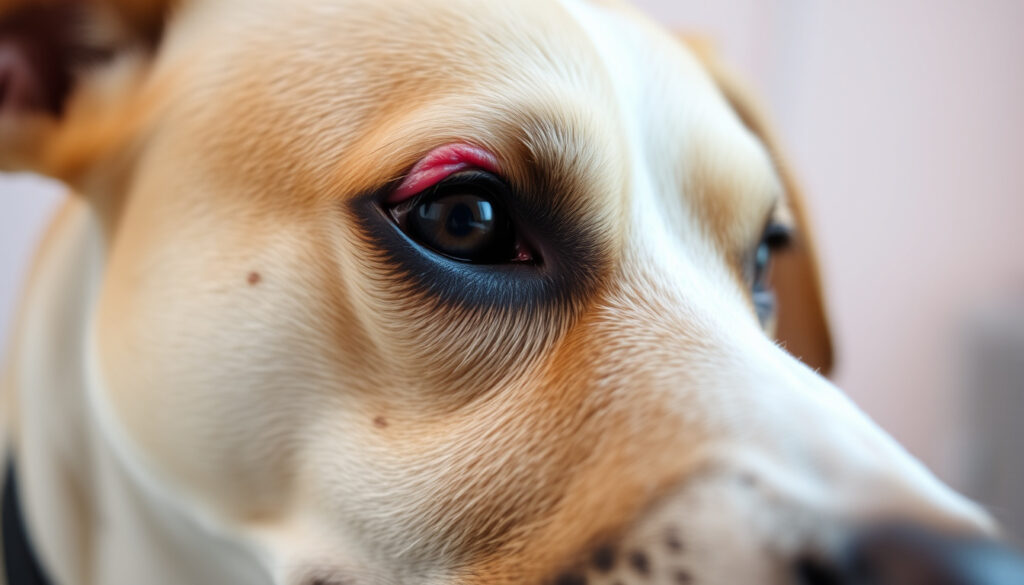
If you’ve noticed a pinkish-red lump at the inner corner of your dog’s eye, you’re likely seeing cherry eye—a prolapse of the third eyelid gland. This common condition in young dogs and certain breeds requires prompt veterinary attention to avoid long-term complications.
Commonly affected breeds: Bulldogs, Beagles, Cocker Spaniels, Shih Tzus ·
Typical age at onset: Under 1 year ·
Success rate of surgical replacement: 90%–95% ·
Approximate cost per eye (surgical): $300–$800
Quick snapshot
- Prolapse of the third eyelid tear gland (Cornell University College of Veterinary Medicine)
- Appears as a red mass in the inner corner of the eye (Cornell University College of Veterinary Medicine)
- Commonly seen in young dogs and certain breeds (Cornell University College of Veterinary Medicine)
- Genetic predisposition (Blue Cross UK)
- Weak connective tissue around the gland (Blue Cross UK)
- Brachycephalic breeds: Bulldogs, Shih Tzus, etc. (Blue Cross UK)
- Surgical repositioning (recommended) (Veterinary Partner (VIN) – professional veterinary network)
- Anti-inflammatory medications (temporary) (Veterinary Partner (VIN) – professional veterinary network)
- Warm compresses and lubrication (supportive only) (Veterinary Partner (VIN) – professional veterinary network)
- High success rate with surgery (90–95%) (Eye Vet – UK veterinary ophthalmology practice)
- Low recurrence if performed by a specialist (Eye Vet – UK veterinary ophthalmology practice)
- Untreated cases risk chronic dry eye (Eye Vet – UK veterinary ophthalmology practice)
Six key facts about cherry eye help you understand the condition at a glance:
| Fact | Detail |
|---|---|
| Medical term | Prolapse of the nictitating membrane gland |
| Commonly affected age | Under 1 year |
| Predisposed breeds | Bulldog, Beagle, Cocker Spaniel, Shih Tzu, Lhasa Apso |
| Surgical success rate | 90–95% |
| Estimated surgical cost | $300–$800 per eye |
| Risk if untreated | Keratoconjunctivitis sicca (dry eye) |
How do you treat cherry eye in dogs?
Surgery restores tear production but non-surgical options only buy time. For most dogs, prompt gland replacement prevents lifelong dry eye medication.
Surgical replacement (most common)
- The standard of care is surgical repositioning of the prolapsed gland, not removal. Cornell University College of Veterinary Medicine (academic veterinary hospital) states that removal increases dry eye risk.
- VCA Animal Hospitals (nationwide chain of animal hospitals) also warns that gland removal is not a recommended first-line treatment.
- PetMD (veterinary medicine consumer outlet) calls surgical replacement the best treatment.
Tacking vs. pocket techniques
- Orbital rim tacking: Permanent sutures anchor the gland to the bone around the eye, described by Eye Vet (UK veterinary ophthalmology practice).
- Mucosal pocket technique: The gland is tucked into a surgically created pocket in the third eyelid. Veterinary Partner (VIN) – professional veterinary network notes this method is more common but requires specialized equipment.
Non-surgical anti-inflammatory therapy
- Topical anti-inflammatory drops may reduce swelling but do not permanently fix the prolapse. Blue Cross UK (animal welfare charity) explains they are a temporary measure.
- Artificial tears or lubricants can keep the eye comfortable until surgery. VCA Animal Hospitals recommends them for short-term use.
Home management and monitoring
- Warm compresses may help soothe irritation but are not a cure.
- Never attempt to push the gland back yourself—this can cause damage and infection.
The pattern: Surgery is the only reliably effective treatment, but the choice of technique depends on your vet’s expertise and your dog’s anatomy. Non-surgical options merely postpone the inevitable.
What causes cherry eye in dogs?
Anatomy of the third eyelid gland
Cherry eye is a prolapse of the gland of the nictitating membrane—the third eyelid. Wikipedia (open encyclopedia) provides a clear definition of this structure. The gland normally sits beneath the eyelid, producing a significant portion of the tear film. When connective tissue weakens, it pops out, forming the characteristic red mass.
Breeds with higher risk
- Brachycephalic (short-nosed) breeds are predisposed. Cornell University College of Veterinary Medicine lists Bulldogs, Cocker Spaniels, Beagles, and Shih Tzus among commonly affected.
- Blue Cross UK describes it as an inherited condition in many breeds, meaning it can run in families.
Age and hereditary factors
- Most cases appear in dogs under one year old, according to Eye Vet.
- Exact genetic markers have not been fully identified, but breed prevalence strongly suggests a hereditary component.
What this means: Cherry eye is largely a genetic condition. If you own a predisposed breed, early awareness is your best defense.
Does cherry eye go away on its own?
Spontaneous resolution is rare
- Veterinary Partner (VIN) states that cherry eye rarely resolves without treatment.
- Some glands may temporarily retract with anti-inflammatory therapy but typically prolapse again.
A gland that appears to go away on its own still risks future prolapse and may already be producing fewer tears.
Consequences of leaving untreated
- An untreated prolapsed gland can lead to chronic dry eye (keratoconjunctivitis sicca, or KCS). Cornell University warns that KCS causes discomfort, corneal ulcers, and vision impairment.
- Tear production decreases over time if the gland remains exposed, as noted by Blue Cross UK.
Why this matters: Cherry eye does not heal itself. Without intervention, your dog faces a painful, potentially sight-threatening condition.
How much does it cost to fix a cherry eye on a dog?
Four cost estimates, one reality: prices vary widely depending on location and clinic type.
| Source | Cost Range | Notes |
|---|---|---|
| PetMD | $300–$800 per eye (low-cost clinic); $2,000+ (specialist) | High-end includes surgical specialist fees |
| CareCredit (veterinary financing provider) | National average $544, range $431–$991 | Based on claims data |
| Lemonade Pet Insurance | $300–$1,200 per eye (pocket technique); $700–$1,800 (repositioning) | Gland removal: $500–$1,500, last resort due to dry eye risk |
| MetLife Pet Insurance | $300–$1,900 | Broad range reflecting location and technique |
Factors affecting price
- Geographic location (rural vs. urban clinics).
- Surgeon expertise (general practitioner vs. board-certified ophthalmologist).
- Concurrent procedures (e.g., spay/neuter or dental cleaning).
Insurance coverage
- Pet insurance may cover cherry eye surgery if the condition is not pre-existing.
- According to Lemonade, pocket technique costs roughly $300 to $1,200 per eye, and many plans cover part of it after a waiting period.
The trade-off: Spending more on a specialist often means a lower recurrence rate and better long-term tear production. Cheaper surgery may save money upfront but increase the chance of a second procedure.
Is cherry eye in dogs dangerous?
Short-term vs. long-term risks
- Cherry eye itself is not acutely dangerous. Veterinary Partner (VIN) clarifies it is a cosmetic concern initially.
- However, the chronic dry eye that results from an untreated prolapse is serious: it can cause corneal ulcers and permanent scarring, Cornell University explains.
Risk of dry eye (KCS)
- The prolapsed gland stops functioning properly, reducing tear production by up to 50% over time.
- Blue Cross UK states that if the gland remains prolapsed, tear production decreases, making KCS likely.
Impact on vision
- Dry eye leads to inflammation, pain, and potentially impaired vision. PetMD notes that chronic KCS can cause blindness if untreated.
- Surgery is recommended to preserve tear production and avoid these outcomes.
The implication: Cherry eye is a red flag for future eye disease, not a cosmetic blemish. Ignoring it puts your dog’s comfort and vision at risk.
Comparison: Surgical vs. Non-Surgical Options
Three treatment paths, one clear winner for long-term health:
| Treatment | Success Rate | Cost | Risk of Recurrence |
|---|---|---|---|
| Surgical repositioning (pocket or tacking) | 90–95% | $300–$2,000+ | 5–10% |
| Anti-inflammatory drops/ointment | Temporary only | $10–$50 per month | 100% (unless surgery follows) |
| Gland removal (last resort) | 100% (no prolapse) | $500–$1,500 | None, but causes dry eye |
The pattern: Surgery gives the best chance of normal tear function. Non-surgical options are bridges to surgery, not permanent solutions.
Upsides
- Surgery restores gland function in most cases.
- Recurrence is low when done by a specialist.
- Protects against chronic dry eye.
- One-time cost (no ongoing medication).
Downsides
- Surgery requires anesthesia and recovery time.
- Cost can be high, especially with a specialist.
- Recurrence possible (5–10%).
- Not all general practitioners are skilled in advanced techniques.
Step-by-Step Guide: What to Do for Cherry Eye
- Recognize the signs. A red, fleshy mass at the inner corner of your dog’s eye, often appearing suddenly. It may come and go initially.
- Consult a veterinarian promptly. Even if the gland retracts, have your dog examined. Cornell University recommends referral to a veterinary ophthalmologist for complex cases.
- Preserve tear production. Use artificial tears or lubricating ointment (as directed by your vet) to keep the eye moist until surgery. VCA Animal Hospitals advises this as a temporary comfort measure.
- Plan for surgery. Discuss technique options (pocket vs. tacking) and cost. If your dog is a high-risk breed, consider a specialist.
- Post-operative care. Follow your vet’s instructions: limit activity, apply antibiotic drops, and use an Elizabethan collar to prevent rubbing.
- Monitor for recurrence. Check the eye daily for the first month, then regularly thereafter. Early detection of a second prolapse improves outcome.
Confirmed Facts vs. What Remains Unclear
Confirmed facts
- Cherry eye is a prolapse of the third eyelid gland. (Cornell)
- Surgical replacement is the standard of care. (Veterinary Partner)
- Untreated cherry eye can lead to dry eye. (Cornell)
- Certain breeds are genetically predisposed. (Blue Cross UK)
What’s unclear
- Efficacy of long-term non-surgical management is not well-documented.
- Exact genetic markers have not been fully identified.
- Breed-specific incidence rates are not systematically aggregated in the literature.
- Long-term recurrence rates comparing surgical techniques are not well-studied.
Expert Perspectives
The prolapsed gland should be replaced surgically, not removed, because the gland is essential for tear production. Removing it significantly raises the risk of dry eye.
Cornell University College of Veterinary Medicine
Two main surgical techniques exist: anchoring the gland to the orbital rim, or tucking it into a pocket in the conjunctiva. The choice depends on the surgeon’s experience and the dog’s anatomy.
Veterinary Partner (VIN)
Cherry eye is an inherited condition in many breeds, so owners of predisposed dogs should be vigilant from puppyhood onward.
Blue Cross UK
Cherry eye is more than a cosmetic issue—it’s a window to your dog’s tear gland health. Left untreated, it leads to dry eye, pain, and potential vision loss. Surgery is the only reliable fix, and the investment of $300–$800 per eye buys your dog a lifetime of comfortable, protected vision. For dog owners, the choice is clear: seek prompt surgical care for a cherry eye, or risk your pet’s long-term eye health.
Related reading: **Complex Regional Pain Syndrome: Symptoms, Causes & Treatment**
petmd.com, finance.yahoo.com, vcahospitals.com, blissanimalhospital.com, youtube.com, drkellysvet.com
Cherry eye in dogs is a common condition in young canines, and understanding cherry eye in dogs can help owners make informed decisions about treatment.
Frequently asked questions
Can cherry eye be prevented?
Not entirely, since genetics play a large role. However, regularly checking your dog’s eyes and prompt treatment at first sign can prevent complications.
Does cherry eye hurt my dog?
In the early stages, it is rarely painful, but the resulting dry eye causes irritation, discomfort, and pain over time.
How long does cherry eye surgery take?
The procedure typically takes 30 to 60 minutes per eye, not including anesthesia setup and recovery.
Is cherry eye genetic?
Yes, it is considered an inherited condition in many breeds. Blue Cross UK notes that weak connective tissue is passed down in certain lines.
Can cherry eye affect both eyes?
Yes, about 40% of cases affect both eyes, though not necessarily at the same time.
What is the recovery time after surgery?
Most dogs recover from anesthesia within a day. Full healing of the conjunctiva takes 2–3 weeks, during which activity should be restricted.
Are there any home remedies that work for cherry eye?
No. Warm compresses and artificial tears can soothe, but they do not fix the prolapse. Surgery is required to restore normal anatomy.
More related posts
 Samsung Galaxy S26 Ultra – Rumors, Specs, Release Date
 Rheumatoid Arthritis: Symptoms, Causes, and Treatment
 Titus Makin Jr. – Why He Left The Rookie and His Music Now
 What Is a Landing Page? Definition, Vs Website & How to Create
 80+ Rizz Pick Up Lines: Smooth, Flirty and Cheesy Lines
 Nordic Crackdown: Sweden’s Tougher Stance on Offshore Gambling 2025-2026
 Pearl (2022 Film): Prequel, Scares, and Character Study
 How to Pay with Apple Pay: Step-by-Step Guide