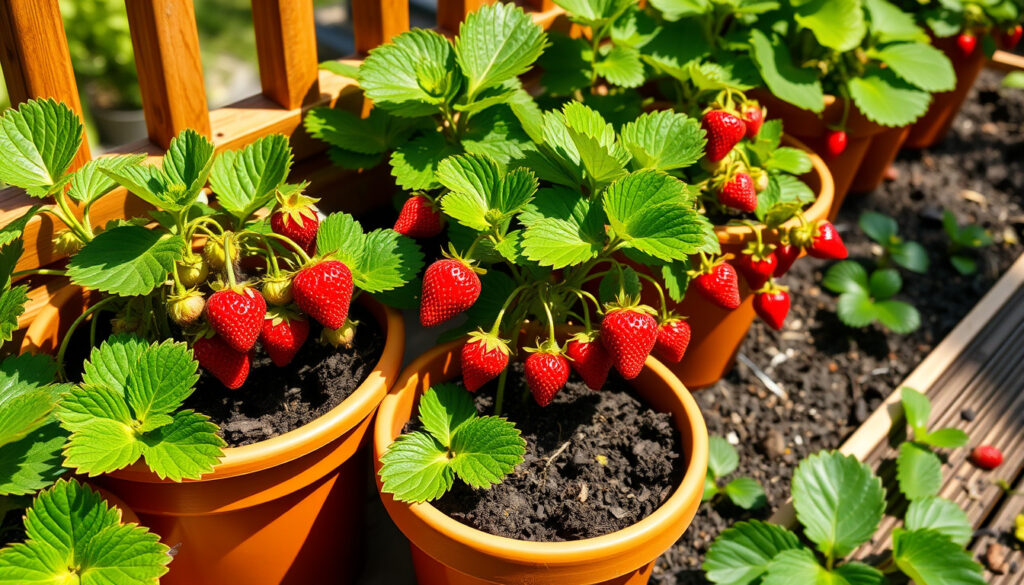
How to Grow Strawberries: Beginner Guide to Pots & Ground
Most people toss strawberry scraps without realising those tiny seeds clinging to the outside of the fruit hold everything needed to grow a new plant. With nothing more than a supermarket berry, a basic pot, and a sunny windowsill, beginners can start a strawberry patch that improves every season for at least three years. The process costs less than £1 per plant once established and requires only consistent moisture and patient waiting.
Ideal soil type: moist but well-drained with organic matter · Planting position: base of stem above soil surface · Container depth: 8–12 inches · Propagation source: seeds from supermarket strawberries · Soil amendment: compost or potting mix
Quick snapshot
- Strawberry seeds need light to germinate (Instructables)
- Containers need 8–12 inches depth (EarthBox)
- Remove all first-year flowers to boost next year’s crop (Instructables)
- Exact yield per plant varies widely
- Optimal humidity levels for seed germination not quantified
- Specific fertilizer type and application rates not documented
- Seeds germinate in 2–3 weeks (Instructables)
- Plant in early to mid-April (Iowa State University Extension)
- Plants remain productive for 3 years (Instructables)
- Pinching first-year flowers redirects energy to roots
- Runner plants should be snipped to boost berry production
- Mulching keeps fruit clean and reduces rot risk
Key specifications for container strawberry growing are well-documented across multiple gardening authorities.
| Attribute | Value |
|---|---|
| Preferred soil | Organic matter enriched, well-drained |
| Planting depth | Roots covered, stem exposed |
| Container depth | 8–12 inches |
| Container width | 12–18 inches |
| Container prep | Deep gravel layer for drainage |
| Seed source | Supermarket strawberries |
| Germination time | 14–21 days (2–3 weeks) |
| Plant density | 3–4 plants per square foot maximum |
How do you grow strawberries for beginners?
Starting with the basics makes strawberry growing far less intimidating than it first appears. The process breaks down into soil preparation, planting technique, and ongoing care—three stages that any beginner can manage with household items and a bit of patience.
Soil preparation
Strawberries thrive in soil that holds moisture without becoming waterlogged, which means well-drained conditions are non-negotiable. Iowa State University Extension notes that strawberry roots are shallow, making surface area more important than depth when choosing containers. A soil-based compost mixed with perlite or coarse sand improves drainage while maintaining the moisture balance strawberries need. Organic matter in the soil feeds the plants throughout the season, reducing the need for frequent fertilisation.
Planting steps
The crown of the strawberry plant—the thick section where roots meet stems—must sit level with the soil surface when planting. According to Iowa State University Extension, positioning the crown above the soil prevents rotting, while burying it too deep smothers the plant. Cover the roots thoroughly but leave the crown exposed to air and light. If planting in a container, add a layer of gravel or broken crocks at the base before filling with compost, which prevents drainage holes from clogging.
Strawberries are an ideal container crop because they do not need deep roots. Give them good soil, drainage, and steady moisture, and they will produce surprisingly well.
Strawberries are an ideal container crop because they don’t need deep roots. Give them good soil, drainage, and steady moisture, and they’ll produce surprisingly well.
— Mark Bolt, Vice President, EarthBox
Basic care
Watering consistency matters more than frequency. EarthBox advises keeping soil moist but never soggy, as strawberry roots sitting in standing water develop rot quickly. Containers with multiple drainage holes prevent this problem, but they also dry out faster than garden beds, so checking soil moisture daily during warm weather becomes essential. Fertilisation should begin once flowering starts, supporting the energy demands of fruit development.
Growing strawberries in containers keeps berries elevated above soil level, reducing slug and snail damage while preventing soil splash that causes fruit rot. However, container plants need more frequent watering than in-ground specimens.
Which month do you plant strawberries?
Timing the planting correctly sets the entire growing season up for success. Strawberry plants establish themselves fastest when conditions are mild but warming, giving roots time to settle before the demands of flowering and fruiting begin.
Best planting times
Container strawberries should be started in spring during early to mid-April, according to Iowa State University Extension. This window allows the plant to put energy into root development during the first season while temperatures remain cool enough to reduce stress. If starting from seeds rather than nursery plants, begin the germination process indoors 6–8 weeks before this outdoor planting window to account for the additional time seeds require to sprout.
Regional variations
Gardeners in cooler climates (USDA zones 3–5) may need to start containers indoors or on a sunny windowsill, moving them outside gradually once overnight temperatures stay above 10°C. Those in warmer regions (zones 6+) can plant earlier in March, though strawberries do need a period of winter chilling below 7°C to trigger proper flowering the following season. Adjust timing based on local frost dates rather than strictly following calendar months.
Planting too early exposes young strawberries to frost damage; planting too late means the plant spends its first summer establishing roots instead of building productive capacity for year two.
The implication for beginners is clear: calendar flexibility matters more than precision. Watch your local weather patterns rather than relying on a fixed month.
Do strawberries grow better in pots or ground?
Both growing methods work well, but they suit different situations. The choice depends on available space, climate, and how much maintenance the gardener prefers to undertake.
Pots advantages
Container growing keeps berries elevated above soil level, which helps reduce problems with slugs, snails, and soil splash that can cause fruit rot, according to EarthBox. Pots work well for renters, apartment dwellers, or anyone with poor native soil. They also allow strawberries to be moved to follow sun patterns or brought indoors during extreme weather. The controlled environment makes it easier to maintain consistent moisture levels and prevents the spread of soil-borne diseases that can build up in ground beds over time.
Ground benefits
In-ground strawberries benefit from natural soil moisture retention and a more stable root zone temperature. Once established, they typically require less frequent watering than container plants. The larger root volume available in garden soil often produces more vigorous plants and larger berries. However, ground planting exposes strawberries to soil-dwelling pests and makes weed control more demanding.
The practical reality is that beginners with limited space benefit most from containers, while gardeners with permanent beds may prefer in-ground cultivation for superior yields.
A direct comparison reveals the trade-offs between convenience and productivity.
| Factor | In-ground | Container |
|---|---|---|
| Watering frequency | Less often | More often |
| Pest exposure | Higher (slugs, soil pests) | Lower (elevated position) |
| Soil disease risk | Higher over time | Minimal |
| Setup cost | Minimal | Containers and potting mix |
| Best for | Permanent beds, large gardens | Beginners, limited space |
How to grow strawberries in pots?
Container strawberry growing removes the variables that trip up many beginners—poor soil, pest pressure, and uncertain positioning—while keeping all the growing requirements manageable in a small space.
Container selection
The best containers for strawberries are wide rather than tall, since strawberry roots spread horizontally near the surface rather than descending deeply. EarthBox recommends containers at least 8–12 inches deep and 12–18 inches wide, which provides enough room for 3–4 plants per square foot without crowding. Strawberry pots with open pockets along the sides allow more plants to grow in a single container, though Iowa State University Extension notes that upper plants in side pockets dry out more quickly and need extra attention during watering.
Step-by-step planting
Fill the container with a quality potting mix rather than garden soil, as EarthBox advises against using garden soil in containers because it compacts and drains poorly. Place the crown of each strawberry plant level with the soil surface—never buried, never exposed. Space plants 8–10 inches apart to allow air circulation, which reduces fungal risk. After planting, water thoroughly until drainage runs clear from the bottom holes, then place the container in full sun.
Wide containers outperform tall, narrow pots because strawberries have shallow root systems and need surface area more than depth. Beginners often choose pots based on visual appeal rather than root biology.
How many strawberries will one plant give?
Yield expectations help beginners plan their harvest and understand whether strawberry growing is worth the effort for their household needs.
Yield expectations
Strawberry plants remain productive for approximately 3 years before yields decline noticeably, according to Strawberry Plants. During that productive lifespan, a healthy plant typically produces 0.5–1kg of fruit per season, depending on variety and growing conditions. The first year produces little to no harvest because removing first-year flowers redirects energy into root and runner development. Full production begins in year two and peaks in year three, making strawberry growing a medium-term investment rather than a quick-return crop.
Growth timeline
Strawberry seeds typically germinate in 2–3 weeks (14–21 days) under normal conditions, according to Instructables, though the fastest recorded germination under optimal UK summertime conditions reached 11 days. Once seedlings emerge and are transplanted to permanent containers, expect 2–3 months before flowering begins, then another 4–6 weeks for fruit to ripen after flowering. The entire cycle from seed to harvest spans approximately 5–7 months, which is why starting seeds early in the season matters.
Patience defines strawberry growing more than technique. Plants started from seed in early spring will not produce a meaningful harvest until their second year, so beginners who understand this timeline avoid the frustration of unrealistic first-season expectations.
Those willing to invest a full growing season in root development reap significantly better harvests from year two onwards.
Growing strawberries from seeds
Supermarket strawberries work as a seed source for budget-conscious beginners who want to experiment without buying starter plants. The process takes longer than planting nursery stock, but the results are just as rewarding.
Extracting seeds from fruit
Strawberry seeds are located on the outside of the fruit, making extraction straightforward. According to Ideal Home, the seeds should be extracted by thinly slicing off the flesh with a kitchen knife and placing the slices on kitchen roll with the seed-bearing side facing upwards. This setup allows the flesh to dry and the seeds to adhere to the paper, making collection simple once drying completes. Viable seeds reportedly sink to the bottom when placed in water, which provides a quick viability test before planting.
Germination process
Strawberry seeds need light to germinate and should not be buried deeply, as Instructables confirms. Barely cover the seeds with soil—just enough to anchor them—and keep the surface consistently moist using a spray bottle rather than a watering can, which can dislodge or bury small seeds. Loose, well-drained soil works best because germinating seeds need both water and oxygen simultaneously. Place the container in a sealed plastic bag or cover during the initial germination period to retain humidity, then remove the covering once seedlings appear to prevent burning under intensified sunlight.
Seedlings can first appear within 10 days of sowing under optimal conditions, though 2–3 weeks is more typical. Once any seedlings emerge, remove the plastic covering immediately—continued sealing traps heat and moisture that will burn tender young shoots.
The evidence from multiple sources confirms that seeds extracted from supermarket strawberries germinate reliably when handled correctly. You do not need to be a seasoned gardener to grow your own strawberries at home using the off-cuts from your store-bought fruit.
You don’t need to be a seasoned gardener to be able to grow your own strawberries at home using the off-cuts from your store-bought fruit.
Growing strawberries indoors
Indoor strawberry growing suits those without garden access or anyone wanting fresh berries year-round on a windowsill or balcony. The key is matching container size, light exposure, and variety to the indoor environment.
Containers for indoor growing should be at least 8–12 inches deep and 12–18 inches wide, as EarthBox recommends, with multiple drainage holes to prevent waterlogging. Quality potting mix prevents the compaction problems that affect indoor containers faster than outdoor ones. Place the container on the sunniest windowsill available—south-facing windows work best in the northern hemisphere—and consider supplementing with grow lights during winter months when natural light falls below 6 hours daily.
Indoor strawberries need the same first-year flower removal as outdoor plants to build strong root systems before investing energy in fruit production. Fertilisation becomes more critical indoors because potting mix contains fewer nutrients than garden soil and container volume limits nutrient availability. Watering from both the top and sides helps maintain consistent moisture throughout the soil volume, particularly important in heated indoor environments where evaporation accelerates.
Indoor growers should treat containers as self-contained ecosystems that require more active management than garden beds. Without natural rainfall and groundwater access, every moisture level depends entirely on the gardener’s attention.
What cannot be planted next to strawberries?
Companion planting affects strawberry success significantly. Some plants compete for nutrients or harbour pests that damage strawberries, while others can provide beneficial growing conditions or pest protection.
Avoid planting strawberries near members of the nightshade family—tomatoes, potatoes, peppers, and aubergines—because these crops share soil-borne disease risks, particularly verticillium wilt, which persists in soil for years and can devastate strawberry plantings. Brassicas including cabbage, cauliflower, and Brussels sprouts compete aggressively for soil nutrients and can stunt strawberry growth. Fennel contains compounds that inhibit the growth of many garden plants including strawberries, making it a poor companion choice.
Beneficial companions for strawberries include borage, which reportedly deters some insect pests, and herbs such as thyme and sage that may help confuse pest-finding insects. Beans and peas fix nitrogen in soil, benefiting strawberries planted nearby in subsequent seasons. The general principle is maintaining at least 1.5 metres between strawberry beds and incompatible plants, or using containers to keep root systems physically separated.
Rotating strawberry beds to different garden locations every 3 years reduces disease buildup, but this requires careful planning to ensure incompatible crops never occupy the same space consecutively.
The pattern emerging from soil science confirms that strawberries are highly sensitive to what grows around their root zones. Isolation through containers remains the most reliable protection against companion planting mistakes.
Do coffee grounds help strawberries grow?
Coffee grounds appear frequently in online gardening advice as a strawberry amendment, but the reality is more nuanced than the enthusiasm suggests.
Used coffee grounds add organic matter to soil and can improve drainage in heavy soils while attracting earthworms that further improve soil structure. However, coffee grounds are mildly acidic when fresh, which can lower soil pH beyond strawberries’ preferred range of 6.0–6.5 if applied excessively. The nitrogen content in coffee grounds is minimal and becomes available to plants only as the grounds break down, meaning the fertiliser benefit is slow and modest.
The safer approach is composting coffee grounds before adding them to strawberry beds, which moderates their pH impact and speeds nutrient availability. Used sparingly and mixed into compost, coffee grounds can form part of a varied soil amendment strategy without the risk of over-acidification. Applied directly as a thick layer, they can create a hydrophobic barrier that repels water, which defeats the purpose of maintaining consistent soil moisture.
Mulching keeps fruit clean and reduces rot risk in container strawberry gardens. For coffee grounds specifically, composting first transforms a potential problem into a modest benefit.
Upsides
- Adds organic matter to soil structure
- Attracts earthworms that improve drainage
- Composts well when mixed with other materials
- Reduces kitchen waste going to landfill
Downsides
- Can over-acidify soil if applied fresh in quantity
- May create water-repelling barrier if piled thickly
- Nutrient benefit is slow and minimal
- Does not replace proper fertilisation
Related reading: Grow a Garden Discord: Top Roblox Servers & Invites
While pots work well universally, the Beginner’s UK Strawberry Guide details climate-specific tips for optimal ground yields in Britain.
Frequently asked questions
Can I grow a strawberry from a strawberry?
Yes, strawberry seeds sit on the outside of the fruit and can be extracted, dried, and planted. According to Ideal Home, thinly slice the flesh onto kitchen roll with seeds facing up, allow drying, then collect the seeds for planting. The process works with any supermarket strawberry, though hybrid varieties may not grow true to parent characteristics.
How to grow strawberries from seeds?
Extract seeds from fresh fruit, barely cover with soil (they need light to germinate), keep consistently moist, and expect germination in 2–3 weeks. Once seedlings appear, remove any plastic covering to prevent burning and transplant to permanent containers when 2–3 true leaves have developed.
How to grow strawberries indoors?
Choose a container at least 8–12 inches deep with drainage holes, fill with quality potting mix, and place in your sunniest window. Indoor plants need more attentive watering than outdoor ones and benefit from regular fertilisation. Remove first-year flowers to build root strength before expecting fruit production.
What cannot be planted next to strawberries?
Avoid nightshade family plants (tomatoes, potatoes, peppers) and brassicas (cabbage, cauliflower, Brussels sprouts) near strawberry beds. These either share soil-borne disease risks or compete aggressively for nutrients. Maintain at least 1.5 metres separation or use containers to isolate root systems.
Do coffee grounds help strawberries grow?
Coffee grounds can improve soil structure when composted and mixed in, but fresh grounds may over-acidify soil and create water-repelling barriers if applied in thick layers. Applied moderately and composted first, they contribute to organic soil matter without significant risk.
How to grow strawberries from fruit?
Supermarket strawberries provide viable seeds for propagation. Slice thin pieces of flesh with seeds attached, place on kitchen roll to dry, collect seeds, and plant in moist potting mix barely covered with soil. Germination typically takes 2–3 weeks, and plants require 5–7 months to produce fruit.
What is the best container for growing strawberries?
Wide, shallow containers at least 8–12 inches deep and 12–18 inches wide work best because strawberry roots spread horizontally rather than descending deeply. Terra cotta strawberry pots with side pockets allow more plants per container, though upper pockets dry out faster and need extra watering attention.
Growing strawberries from supermarket fruit is genuinely achievable without specialised equipment. The plants ask for surprisingly little—just well-drained soil, consistent moisture, and patience—while offering a yield that improves each year for at least three seasons. Beginners who start with good drainage, remove first-year flowers, and position containers in full sun are setting themselves up for a harvest that costs less than £1 per plant per season once established.
More related posts
 Phineas and Ferb Season 5: Release, Episodes & FAQ
 Neil Patrick Harris Amy Winehouse – Cake Controversy Explained
 Buffy the Vampire Slayer Cast: Deaths, Careers, Updates
 Holiday Inn Club Vacations: Resorts, Timeshares & Exit Info
 Xbox Series S Price 2025: Cost, Used Value & Is It Worth It
 Nani Lilo & Stitch: Age, Heritage, Relation hip & Live-Action FAQ
 USPS Shipping Price Increase 2026: New Rates and What They Mean
 T-Mobile Store Near Me: Switching, Upgrades & Compatibility